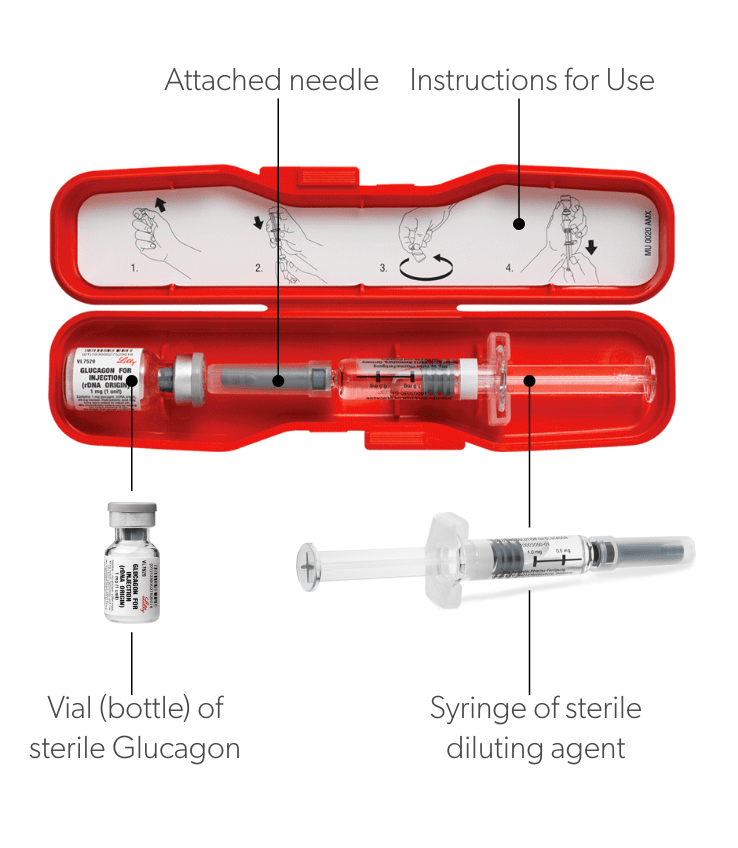
- A glucagon is the most important item a diabetic must own. When one’s blood sugar is so low that they become unconscious or unresponsive, someone close to you must know how to load the syringe in the kit and inject the Glucagon into a muscle. This can bring a severe blood sugar back up to a healthy level in extreme cases.
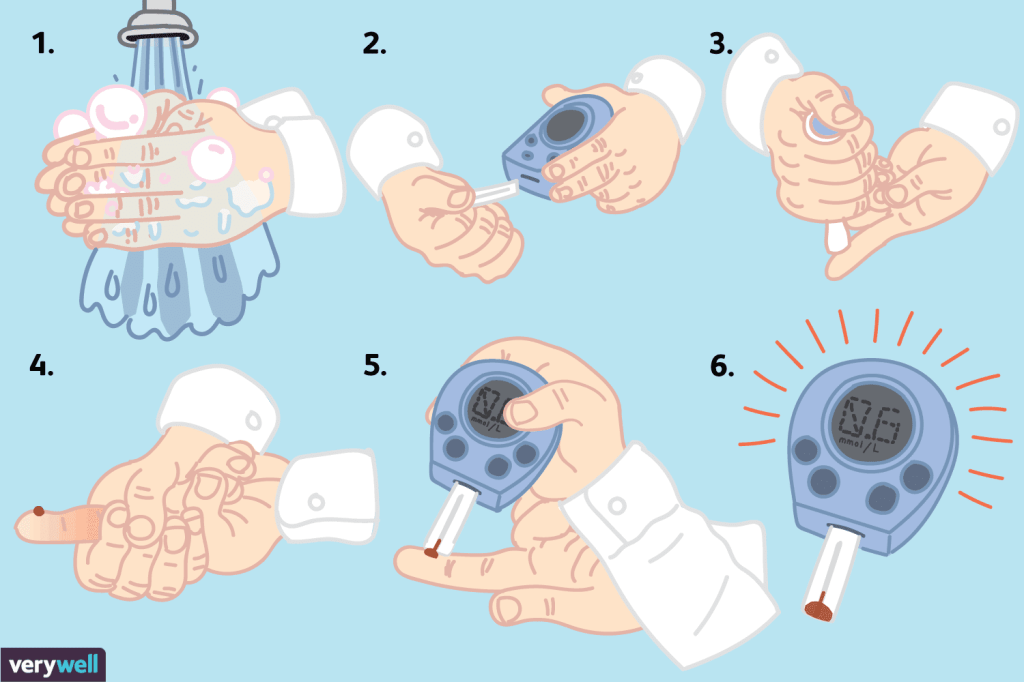
- A glucose meter, test strips, finger pricker and lancets are another key component for every diabetic. The glucose meter is a device that reads your blood sugar. In order to activate the meter, you must load a lancet (needle) into the finger pricker and prick your finger tip in order to draw a small drop of blood. Next, a test strip is inserted into the glucose meter and you touch your fingertip (with the blood) to the test strip. This device then reads your blood and tells you the exact number of your blood sugar. One must do this every few hours to ensure they are within a healthy level (average: 80-170).
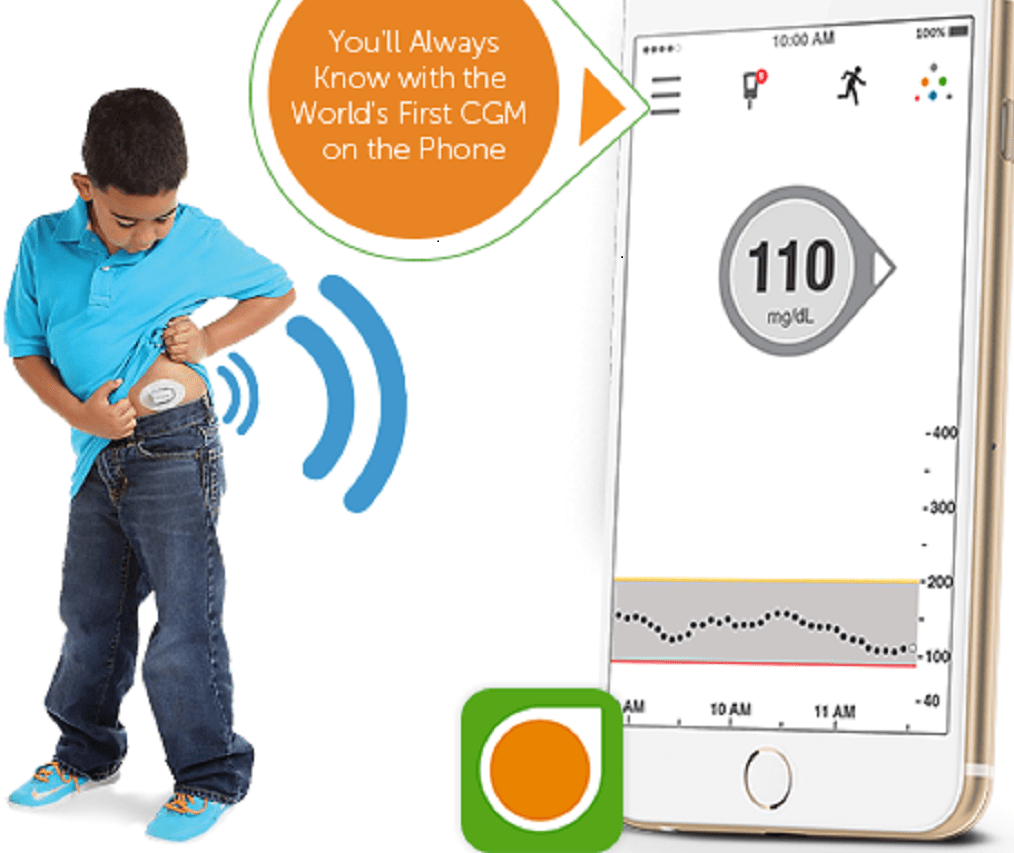
- Alternatives include a Continuous Glucose Monitor (CGM). This device is attached to your body with a thin needle embedded in your skin. It is bluetooth and connects to your phone, having your blood sugar on display at all times. The app alerts you when your blood sugar is dropping or when it is going too high. It must be changed approximately every 10 days, switching to different fatty locations of your body to display the CGM.
- The most essential, lifesaving product is of course insulin. This can come in many different forms including vials, pens, and pumps.
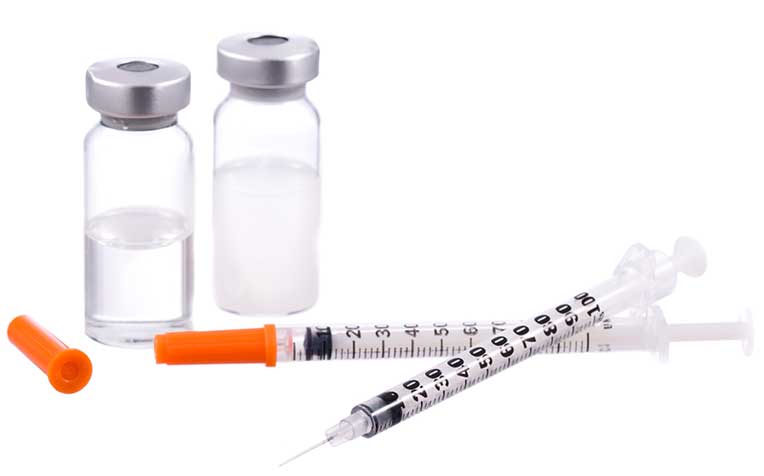
- Vials of insulin (top left picture) come with syringes where you must load insulin into the syringe, pinch a fatty part of your body, and essentially give yourself a shot in which insulin is being injected. This is typically how diabetics begin when first being diagnosed.
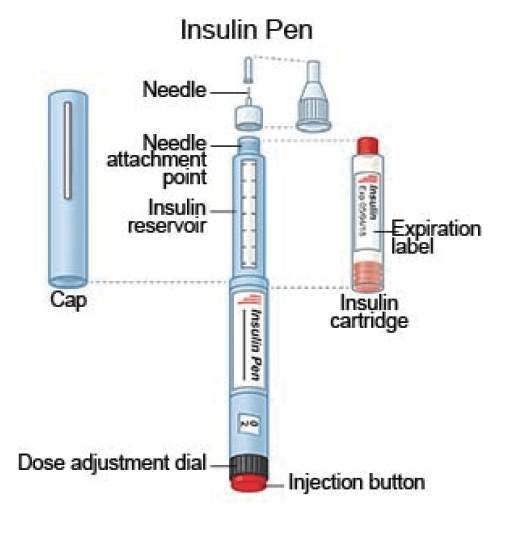
- Another viable option are pens (top right). Pens hold a smaller amount of insulin than vials do, but are easier to transport. When using a pen, you must also have a supply of needle caps which you screw onto the pen. Once the needle cap is on, the pen has a dial which can be spun to land on how many units of insulin you wish to inject. Once the dial is on the correct number, you push the needle into a fatty part of your body and push the button on the bottom of the pen. This is a much easier process as compared to the vial and syringe.
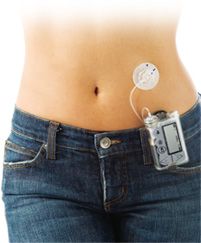
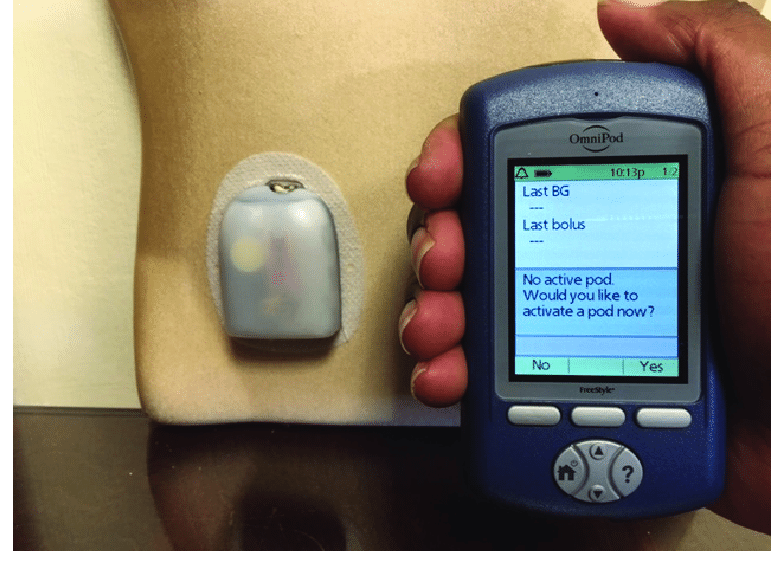
- Once having graduated past the vials and the pens, an option for you is an insulin pump (bottom two pictures). A pump is like a continuous glucose monitor where it is constantly attached to your skin. There are multiple kinds of pumps. Some have wires connecting a small device to the attachment on your skin and others are bluetooth. Essentially, the device that comes with your pump allows you to input the amount of carbs you are eating and your blood sugar and calculates the amount of insulin that should be injected into your body. Next, you simply press a button and insulin is being transmitted into you via a wire. This is a much simpler option with less thinking involved, but can be uncomfortable as it is always attached to you and you must change it every three days.
 Living With Type 1